
Liberia’s Environmental Protection Agency (EPA) is warning farmers and communities to prepare for a potentially hotter and more difficult dry season after satellite observations detected signs of agricultural water stress in seven counties. Sinoe County recorded the highest reported level, with approximately 70 percent of its cropland showing signs of insufficient moisture.
The counties identified in the EPA findings are Sinoe, Grand Kru, Grand Gedeh, Grand Bassa, River Cess, River Gee and Grand Cape Mount. The observations cover the period from October 23 to November 1, 2026, and indicate dryness affecting at least a quarter of cropland across the seven counties, according to the agency’s warning reported by FrontPage Africa.
The figures are indicators of vegetation and moisture stress, not a measurement of crop losses or proof that harvests have already failed. They nevertheless raise concerns for farming households that depend on rainfall and local water sources, particularly if dry conditions persist.
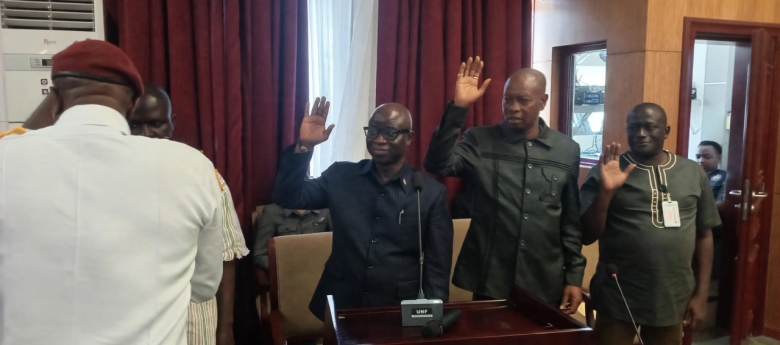
UPDATE — November 27, 2026: The House of Representatives has now heard briefings from Agriculture Minister Dr. J. Alexander Nuetah and EPA Executive Director Dr. Emmanuel Urey Yarkpawolo. Yarkpawolo told lawmakers that the EPA’s early-November monitoring showed severe dryness in 14 counties, with Lofa appearing to be the only exception. He cited dryness levels of 71 percent in Sinoe, 38.5 percent in Grand Kru, 37.5 percent in Grand Gedeh, 36.8 percent in Grand Bassa, 36.4 percent in River Cess and 33.3 percent in River Gee; Maryland was also among the affected counties. He said about 1.17 million people across seven heavily affected counties were exposed, using 2022 census figures. This is a different observation window and a broader measure than the earlier October 23–November 1 cropland-stress figures in this article, so the two sets of figures should not be treated as directly comparable. The EPA’s online early-warning platform describes its hazard map as a working assessment, not an official Liberia Meteorological Service or NDMA warning. Nuetah said severe El Niño conditions could reduce rice yields by 30–50 percent for crops planted during an affected period and estimated that US$25–35 million would be needed for proposed interventions. These are conditional risk estimates and a funding proposal, not confirmed crop losses or an approved budget. After the briefing, the House referred the matter to its Committees on Agriculture, Lands and Environment, which were instructed to investigate and report within two weeks. See FrontPage Africa’s November 27 report.
El Niño raises concern for January to March
In a November 23 interview with the Liberia Broadcasting System, EPA Executive Director Dr. Emmanuel K. Urey Yarkpawolo said the developing El Niño could remain strong during the January–March 2027 period. The agency warned that hotter-than-usual conditions could contribute to lower water levels, increased bushfire risks and pressure on agricultural production.
The US National Oceanic and Atmospheric Administration’s Climate Prediction Center said in its November 12 diagnostic discussion that there was more than a 79 percent chance of a strong-to-very-strong El Niño through January–March 2027. That probability describes the expected strength of the Pacific climate pattern; it is not a prediction that Liberia will experience a particular amount of rainfall or a uniform impact in every county.
The EPA has also cautioned that a hotter or drier seasonal outlook does not rule out heavy rainfall and flooding. Communities located near rivers and creeks could still face flooding if intense rain occurs.
What farmers and communities are being advised to do
The EPA is urging farmers to consult agricultural extension officers and seasonal forecasts before planting. It cautions that the first rainfall should not automatically be treated as the reliable start of the rainy season, because additional dry spells may follow and damage crops at sensitive stages of growth.
For households, the agency recommends drinking safe water regularly during periods of extreme heat, resting in shaded areas and carrying out strenuous outdoor activities during cooler hours. Residents are also encouraged to report declining water levels in wells and creeks, as well as damaged hand pumps, to local leaders so that repairs or alternative water arrangements can be considered.
The EPA says its public climate early-warning platform covers all 15 counties and is updated daily. The seven counties identified in the latest observations should therefore be treated as areas of particular concern in this assessment, not as a complete statement that other counties face no risk.
Preparedness will matter beyond the farming season
Prolonged dryness could affect more than crop production. Lower water levels may put pressure on household water access and river flows used for electricity generation, while dry vegetation can increase the danger of bushfires. At the same time, preparedness plans must account for the possibility of localised flooding during heavy rainfall.
The latest warning adds urgency to the national preparedness questions already raised in the Legislature. HeartTalk Network previously reported on the House of Representatives’ decision to summon the EPA, the National Disaster Management Agency and the Ministry of Agriculture to explain preparations for El Niño. The new county-level observations make timely public guidance, accessible weather information, functioning water points and support for farmers especially important.
Sources: FrontPage Africa, November 25, 2026; Liberia Broadcasting System, November 24, 2026; NOAA Climate Prediction Center, November 12, 2026; Liberia EPA Climate Early-Warning Platform.
HeartTalk Network — Speaking from the Heart.



Leave a Reply