
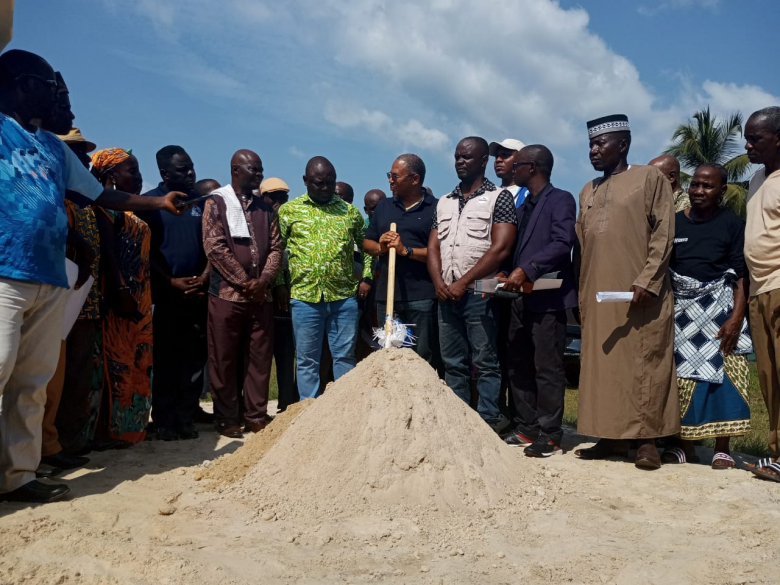
TAPPITA, Nimba County — The Liberia Water and Sewer Corporation (LWSC) has broken ground on a decentralized mini solar-powered water supply project in Tappita City, with two initial groundwater systems planned to improve access to safer water in the Nimba County community.
The project is intended to reduce dependence on unreliable water sources and on older systems that have been difficult to operate because of fuel costs. FrontPage Africa reported on November 24, 2026 that the groundbreaking was led by LWSC Managing Director Mohamed Ali.
What the project is expected to provide
The plans call for two groundwater systems, with production boreholes, solar photovoltaic pumping, chlorination units and public distribution kiosks fitted with six taps. Geophysical surveys are to be used to identify suitable aquifer zones before the boreholes are developed.
Ali said solar power would pump groundwater into elevated storage tanks, reducing the need for generator fuel. The report identified Homeland Construction and Engineering Services Inc. as the contractor for the borehole works and described an expected construction period of about three months.
Chlorination is included in the design to help bring the water to World Health Organization safety standards. That is a planned treatment measure, not confirmation that water from the new system has already been tested or certified. The facilities have not yet been completed or commissioned.
Community management and funding
The proposed operating model includes a community-based Water Management Committee and user fees intended to finance routine maintenance. The arrangement could support local ownership, but its success will depend on transparent management, affordable charges, regular water-quality testing and a clear plan for repairs when equipment fails.
FrontPage Africa reported that Ali said LWSC had set aside US$100,000 to support funding facilitated by Nimba County District Six Representative Dorwon Twain Gleekia. The report did not state the project’s total cost, the exact breakdown of contributions or how many households the systems are expected to serve.
A practical test for water access in Tappita
FrontPage Africa reported that residents have continued to rely on open wells and creeks amid longstanding water-service difficulties in the area. Tappita is also home to Jackson F. Doe Memorial Hospital, making dependable water infrastructure important for households, public facilities and local businesses.
The groundbreaking is an initial step, not yet a delivery milestone. Residents will need clear information on the construction schedule, the number and location of kiosks, expected daily water output, water-testing arrangements, tariffs and who will be accountable for keeping the systems operating after the contractor leaves.
If completed and properly maintained, the solar-powered systems could reduce the burden of collecting water and help make local supply less vulnerable to fuel costs. The public measure of success will be safe water reaching people consistently and at a price communities can afford.
Source
Franklin Doloquee, FrontPage Africa, November 24, 2026: “Liberia: Tappita Launches Mini Solar-Powered Water System to Address Long-Standing Water Crisis.”
HeartTalk Network — Speaking from the Heart.



Leave a Reply