
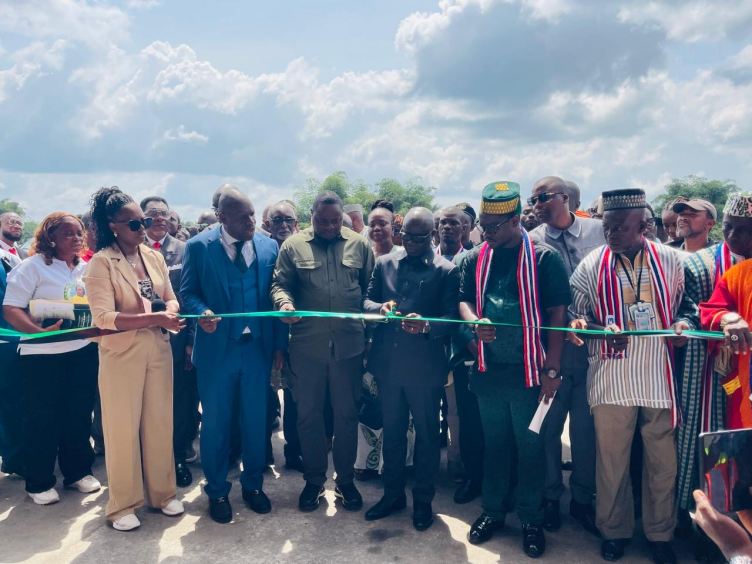
MORRIS FARM, Todee District, Montserrado County — A new rubber-processing facility was commissioned on November 24, adding domestic capacity to turn Liberian-grown natural rubber into standardized industrial products rather than exporting the commodity only in less-processed form.
The ceremony was attended by Agriculture Minister Dr. J. Alexander Nuetah, who represented President Joseph Nyuma Boakai. FrontPage Africa described the investment as a multi-million-dollar, Liberian-owned operation. GTV Online and earlier reporting by The Liberian Investigator identify the Morris Farm facility as B&B Rubber Factory Incorporated; FrontPage Africa’s November 25 report spells the name as BNB Rubber Factory Incorporated. HeartTalk is flagging that difference rather than treating the company name as fully reconciled.
Processing capacity and markets
FrontPage Africa reported that the plant is designed to process natural rubber into Technically Specified Rubber grades TSR 10 and TSR 20, which are used by international rubber and manufacturing industries. Its installed capacity was reported as four metric tons per hour—described by the outlet as approximately 100 metric tons a day. That is a stated plant capacity, not evidence that the factory is already producing at that rate.
Chief Executive Officer Sylvanus B. Broh Sr. told FrontPage Africa that the company obtains raw material from smallholder farmers, brokers, cooperatives and aggregators across Liberia. He also said the business had established relationships with buyers in Austria, Malaysia, Singapore, China and Europe.
The report said the facility was acquired in January 2025, construction began in April 2025, equipment installation started in January 2026 and was completed in July. Trial operations were conducted between September and October before the November commissioning.
Why local processing matters
The opening comes as Liberia enforces Executive Order No. 166, which prohibits the export of unprocessed natural rubber from July 1, 2026 while allowing exports of processed products such as technically specified rubber. The Executive Mansion said the policy is intended to encourage domestic processing, manufacturing, jobs and greater value addition.
A local processing outlet can create another potential buyer for farmers and keep more industrial activity in Liberia. But the benefits will depend on practical details: how much rubber the factory actually buys, whether smallholders receive competitive and timely payments, how consistently it operates, and how many decent jobs it sustains. The reports reviewed did not provide verified employment numbers, actual output since commissioning, annual purchasing targets, farm-gate prices or the total investment cost.
Environmental questions still need answers
The industrial opportunity must also be assessed alongside community safeguards. In an October 16 report, The Liberian Investigator said residents of Morris Farm and nearby communities had complained about odors they attributed to the factory. Those were residents’ allegations, not established findings of pollution. The report said Margibi County authorities had formed a committee chaired by the Environmental Protection Agency, with a 30-day mandate to inspect waste management and chemicals used at the facility.
The same report said company management told a community meeting that the plant used liquefied petroleum gas and was engaging a waste-management company. HeartTalk did not locate a published report of the committee’s findings in the sources reviewed for this article. The commissioning ceremony therefore does not, by itself, resolve the earlier environmental concerns.
Liberia’s challenge is to make domestic value addition work for farmers, workers and host communities at the same time. Transparent production and employment data, fair purchasing arrangements, independent environmental monitoring and public release of inspection findings would help the country judge whether the new capacity is delivering the promised national benefits.
Sources
FrontPage Africa, November 25, 2026: Liberia’s Rubber Economy Gets Local Industrial Boost as BNB Opens US$ Multi-Million Processing Factory; GTV Online News, November 24, 2026: Nuetah Witnesses Launch of B&B Rubber Plant; The Liberian Investigator, October 16, 2026: Kakata Residents Raise Health Concerns over Odor from B&B Rubber Factory; Executive Mansion, June 26, 2026: Executive Order No. 166 on Unprocessed Natural Rubber.
HeartTalk Network — Speaking from the Heart.
Leave a Reply