
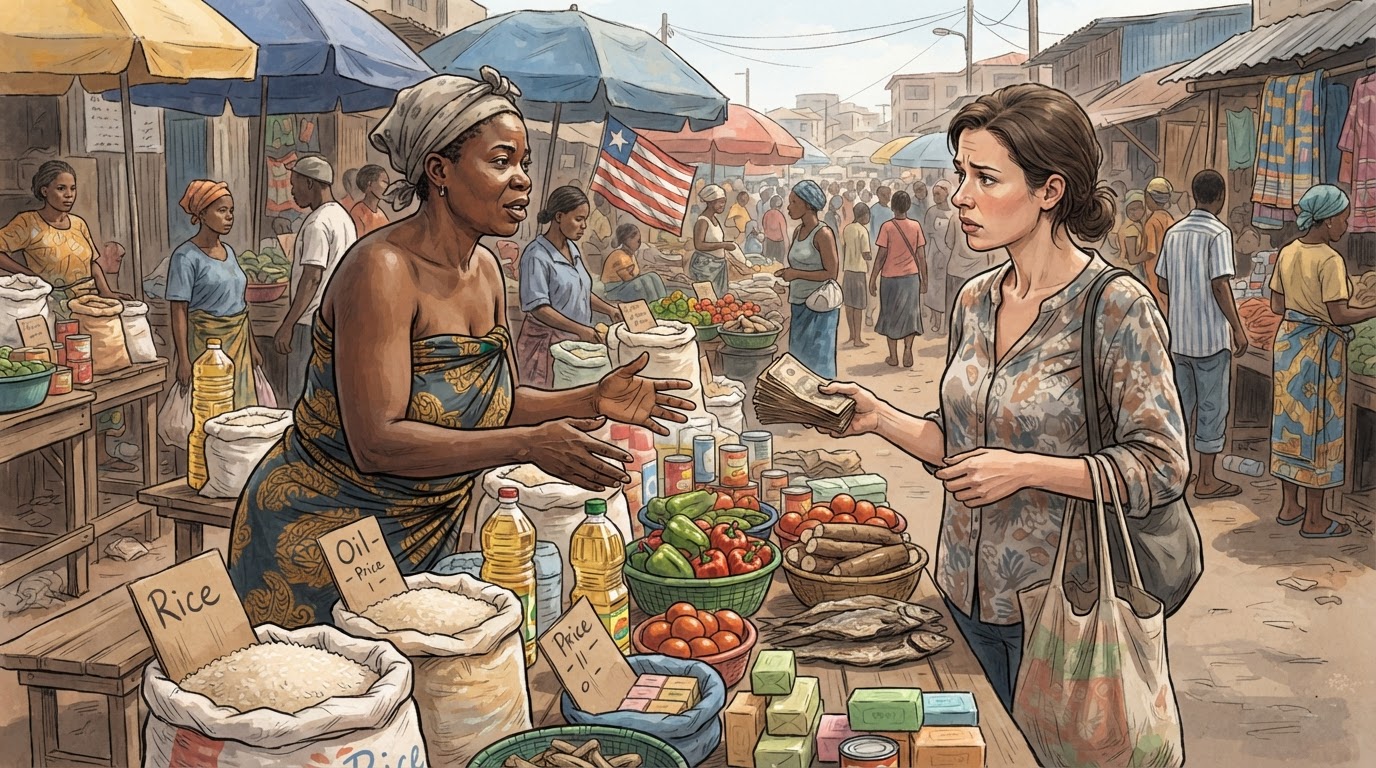
MONROVIA, November 27, 2026 — Liberia’s Senate has directed its Joint Committees on Banking and Currency and Public Accounts to investigate reports of a shortage of Liberian dollar banknotes and the continued high prices of basic goods, despite the local currency’s recent appreciation against the United States dollar.
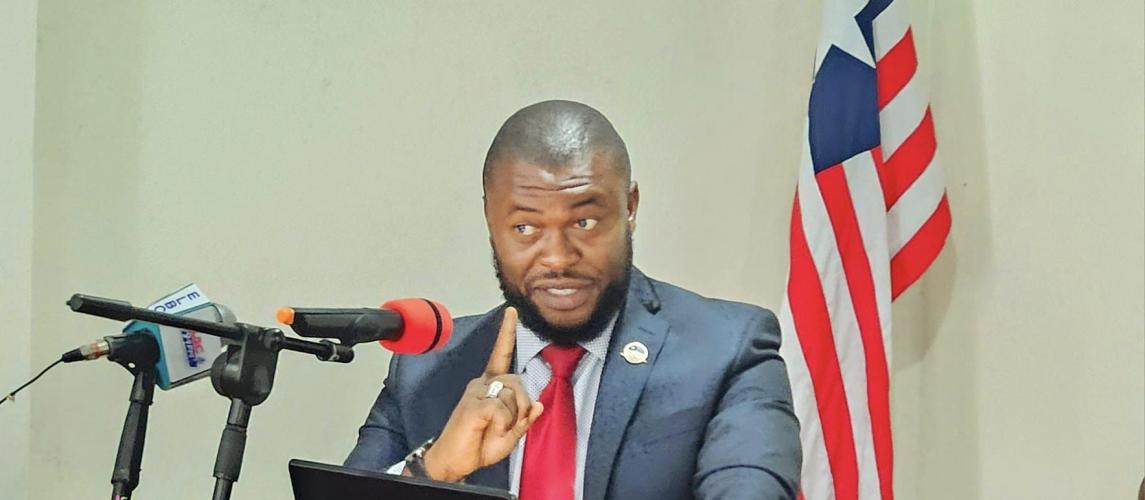
The move followed concerns raised by River Gee County Senator Jonathan Sogbie during the Senate’s regular session on Thursday, November 26. FrontPage Africa reported that it had reviewed Sogbie’s communication, in which he asked lawmakers to investigate the availability of Liberian dollar cash in commercial banks and markets and to seek an explanation from the Central Bank of Liberia (CBL).
The reported Senate inquiry is an oversight step, not a finding that the Central Bank or commercial banks have violated the law. The committees will need to establish the scale of the shortage, where it is most severe, and what has happened to the banknote-printing programme authorized by the Legislature.
Official exchange rates show recent appreciation
The CBL’s published daily exchange-rate table lists a buying rate of L$163.2046 to US$1 and a selling rate of L$165.3005 to US$1 on November 26, 2026. On November 6, the listed buying rate was L$169.2987 and the selling rate L$171.3466. The figures show a strengthening of the Liberian dollar over that period, but they do not establish how quickly or fully lower foreign-exchange costs have been passed through to retail prices.
Sogbie questioned why consumers were not seeing corresponding reductions in the prices of essential goods. He said households, market vendors and small businesses were still facing high costs as the Christmas season approaches. The Senate’s inquiry will need current price data across different markets and counties to determine whether prices are rising, remaining unchanged or falling more slowly than the exchange rate.
What happened to the L$79 billion banknote programme?
According to Sogbie’s communication, the Senate and House of Representatives authorized the CBL on July 16, 2026, to procure and print up to L$79 billion in new banknotes. He told senators that cash remained difficult to obtain and that some notes in circulation were badly worn or mutilated.
An International Monetary Fund staff report on Liberia provides important context. It says the L$79 billion banknote plan is divided into an emergency order of L$19.4 billion and a medium-term printing programme to be competitively procured through 2030. The report says the emergency order was expected to arrive only after mid-2027 because of strong global demand and limited banknote-printing capacity. Legislative authorization, therefore, does not mean that the full amount has already been printed or delivered to banks.
The Senate is seeking an update from the CBL on the procurement process, the status of the emergency order, the expected delivery timetable and how new notes will be distributed. The committees will also need to examine whether the timing and volume of the planned supply match demand for cash in Monrovia and the counties.
Pressure on households and savings clubs
Sogbie warned that limited access to Liberian dollar notes could complicate the end-of-year distribution of savings held by community savings clubs, commonly known as Susu. He said some organizers were concerned about delays in obtaining large amounts of cash from commercial banks. Those reports should be tested with banks and customers rather than treated as a verified description of every bank’s withdrawal policy.
The senator also raised concerns about importers clearing goods through the Freeport of Monrovia and about the difficulties consumers may face if cash remains scarce during the busy holiday trading period. For many market transactions, physical banknotes remain important even as electronic payment services expand.
Why a stronger exchange rate may not immediately lower prices
A stronger local currency can reduce the Liberian-dollar cost of imported goods, but the effect on shop prices may take time. Importers and retailers may still be selling stock purchased when the exchange rate was weaker. Freight, fuel, port charges, storage, taxes, supplier prices and retail margins can also influence the final price. These factors do not excuse unjustified price increases; they show why the authorities need reliable market data before drawing conclusions about the causes.
The CBL’s exchange-rate table confirms the recent movement in the official rates, but the FrontPage Africa report did not include a response from the Central Bank or commercial banks on the reported shortage. The Senate’s inquiry should give the institutions an opportunity to explain cash availability, withdrawal practices, the printing schedule and the relationship between exchange-rate movements and consumer prices.
For consumers, the immediate questions are practical: can they withdraw their savings in usable Liberian dollar notes, can market traders obtain enough cash to conduct business, and will the stronger exchange rate translate into more affordable food and household essentials? Clear answers will require the Central Bank’s data, banks’ explanations and transparent price monitoring.
Sources
FrontPage Africa, November 27, 2026, Liberia: Senate Probes Liberian Dollar Shortage, Rising Commodity Prices; Central Bank of Liberia — Daily Exchange Rates; International Monetary Fund, Liberia: Fourth Review Under the Extended Credit Facility and First Review Under the Resilience and Sustainability Facility.
HeartTalk Network — Speaking from the Heart.


Leave a Reply