
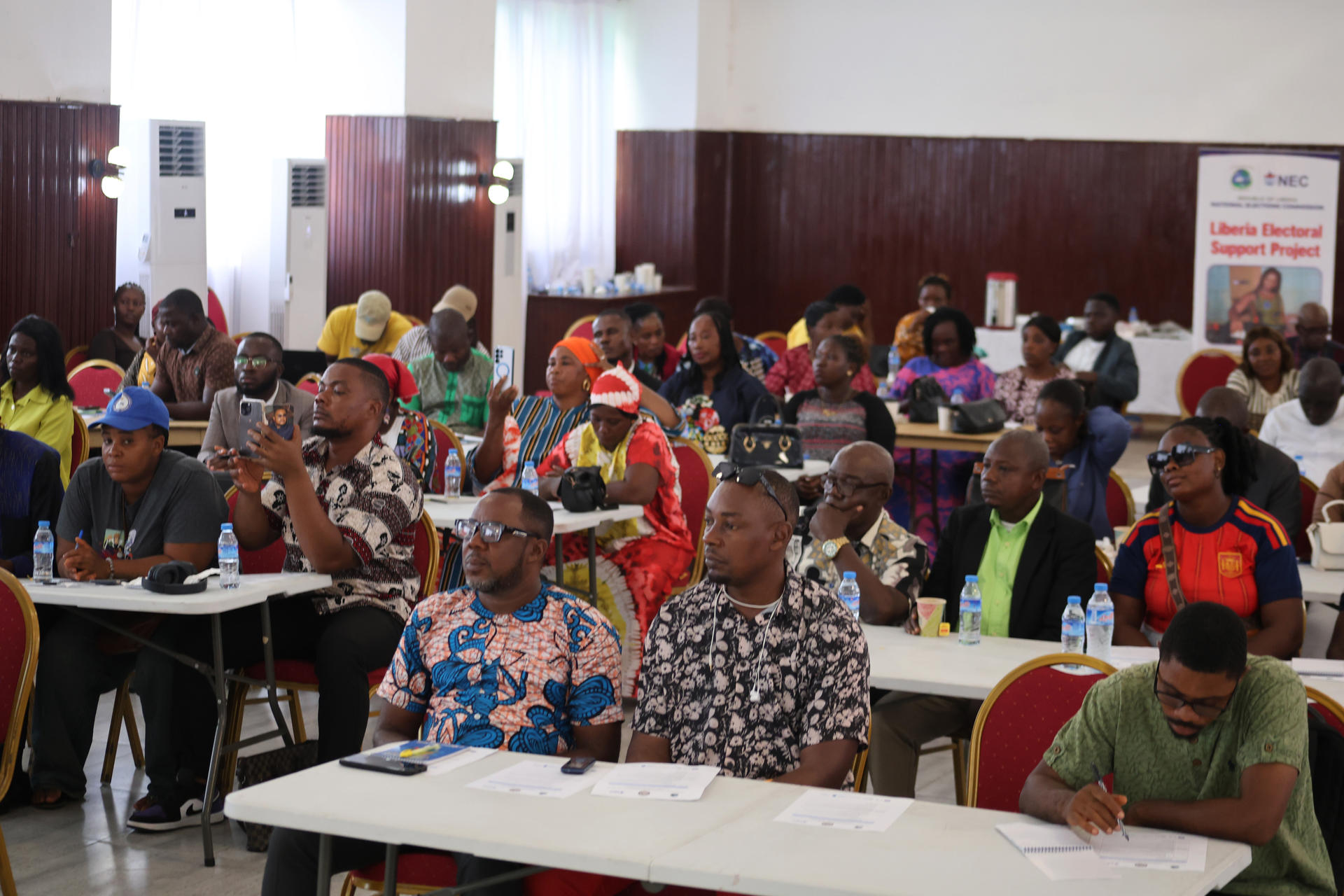
MONROVIA, Liberia — November 28, 2026 — Liberia’s electoral map and the question of equal political representation have returned to the centre of national discussions, after the National Elections Commission (NEC) and the Inter-Party Consultative Committee (IPCC) brought political parties and electoral stakeholders together for a dialogue ahead of the 2029 General Elections.
The one-day meeting was held in Monrovia on Wednesday, November 25, and brought together NEC commissioners and approximately 100 participants representing 49 registered political parties, according to the NEC. The United Nations Development Programme (UNDP), which supports the Liberia Electoral Support Project, said the discussions examined legislative seat apportionment, equality of the vote and the technical and legal questions involved in constituency boundary delimitation.
Why the boundaries are being discussed
Liberia currently has 73 electoral districts. UNDP said those districts were established before the 2011 elections, while demographic changes reflected in the 2022 National Population and Housing Census have increased the importance of reviewing how communities are represented.
Constituency delimitation is the process of drawing or adjusting electoral district boundaries. The aim is to ensure that representation reflects population distribution and complies with constitutional requirements. Any changes can have consequences for the number of voters represented by each lawmaker, voter registration, constituency administration and the logistics of future elections.
The November dialogue provided a forum to examine those issues. It did not, according to the public statements issued by the NEC and UNDP, approve a new electoral map, announce revised constituency boundaries or settle the number of legislative districts for 2029.
NEC urges political parties to engage lawmakers
NEC Commissioner Boakai A. Dukuly, who oversees political affairs, urged political party leaders to give serious attention to boundary delimitation and engage their respective lawmakers so that the process can proceed in accordance with the law.
Williette Cooper, Deputy National Coordinator of the IPCC Secretariat, emphasized transparency, reliable information and inclusive participation in decisions affecting political representation. Dr. Aagon Tingba, speaking on behalf of the Liberia Electoral Support Project, highlighted the importance of seat apportionment and boundary delimitation to representative democracy and public confidence.
Technical sessions were facilitated by Archie Delaney, the NEC’s Data and Spatial Management Consultant. His presentation reviewed the legal framework, developments since 2010 and the technical challenges involved in using population information to assess future representation needs.
What remains unresolved
Participants discussed how potential boundary adjustments could affect political representation, voter registration, constituency management and election operations. They also stressed the need for coordination among the Legislature, NEC, political parties and other national institutions.
Those discussions are important, but they should not be mistaken for a final decision. The public statements did not set out an agreed boundary formula, identify which communities would move between districts, or give a final implementation timetable. Those questions require transparent technical work and decisions through the institutions and procedures established by law.
The process will also need to give communities clear information about how population data are used and how citizens can raise concerns. A boundary exercise that is technically sound but lacks public confidence could deepen political disagreements rather than resolve them.
Support for the process
The dialogue was organized by the IPCC and NEC with support from the Liberia Electoral Support Project, managed by UNDP and implemented in partnership with UN Women, the Netherlands Institute for Multiparty Democracy and the NEC. The project receives financial support from the European Union, Ireland and Sweden.
As Liberia prepares for the 2029 elections, the central test will be whether the consultation develops into a transparent, evidence-based process that gives every community fair representation while respecting the constitutional role of the relevant institutions.
Sources
- UNDP Liberia, “Political Actors and Electoral Stakeholders Discuss Constituency Boundary Delimitation,” November 26, 2026.
- National Elections Commission, “Dialogue on Constituency Boundary Delimitation Intensifies Among Electoral Stakeholders,” November 25, 2026.
- National Elections Commission, Board of Commissioners’ statement on 2029 election preparations and institutional planning, November 23, 2026.


Leave a Reply