

MONROVIA, Liberia, November 28, 2026 — A proposed hydropower development along the St. John River has moved further into field-assessment work, with Arthur Energy Africa (AEA) telling the Ministry of Mines and Energy that members of its project team have arrived in Liberia ahead of construction activities it expects to begin in May 2027.
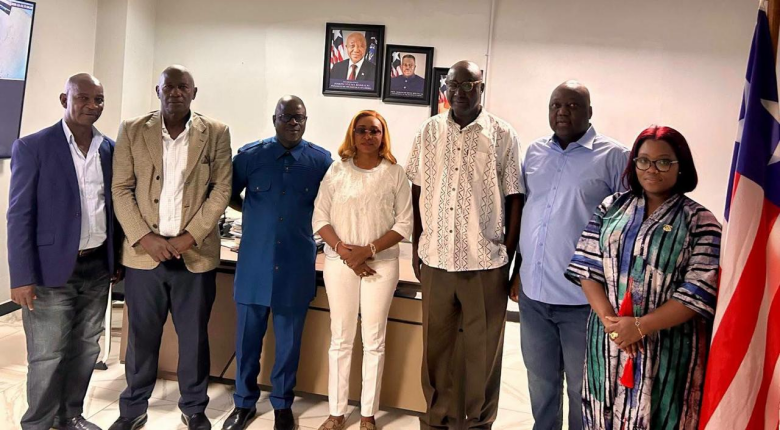
The update follows a meeting between AEA representatives and Deputy Minister for Energy Charles Umehai and ministry officials. Reporting by FrontPage Africa on November 26 says Umehai confirmed that field assessments are under way in the St. John River Basin in Bong and Grand Bassa counties.
The proposed project could eventually add renewable electricity to Liberia’s power system. But the latest update describes preparatory studies, not the start of construction or a completed investment decision. The company’s May 2027 target remains a projection and will depend on the outcome of technical, environmental, social and financing work.
Surveys and impact assessments under way
According to the account of the meeting, the current work includes topographical surveys, collection of environmental and social impact data, geological and geotechnical investigations, and sampling. Umehai said the assessments are being conducted by AEA with support from Liberian and international professionals.
The studies are intended to help determine the river basin’s development potential and prepare for a possible series of hydropower stations. Their findings will be important in identifying suitable sites, understanding the effects on nearby communities and ecosystems, and determining what infrastructure would be required.
Project began with a study memorandum in 2024
The Government of Liberia and Arthur Energy Africa signed a memorandum of understanding on December 30, 2024, involving the Ministry of Mines and Energy, the National Investment Commission and the Ministry of Justice. The announcement, reported by Liberia Public Radio on January 6, 2025, said the arrangement was for comprehensive studies of the St. John River Basin’s hydropower potential.
The original study area was described as a 193-kilometre stretch from the Nuan (also rendered Nuehn) River confluence to the Atlantic Ocean. The memorandum provided AEA with rights to conduct the studies; it should not be confused with a final construction concession, an approved power-purchase agreement or evidence that project financing has been secured.
Earlier 300-megawatt figure remains a developer target
At the time the memorandum was announced, AEA Managing Partner Ing. Jabesh Amissah-Arthur said the company’s goal was to develop multiple sites that could generate approximately 300 megawatts. That figure was presented as the developer’s ambition in the 2025 announcement. The latest report does not provide a completed feasibility result, confirmed installed capacity, project cost or financing package.
For that reason, the 300-megawatt figure should not be treated as power that Liberia has already secured or as a final engineering specification. The scale and timing of any generation will need to be established through the studies, regulatory approvals and subsequent project agreements.
What communities and electricity users should watch
Communities in Bong and Grand Bassa will have a direct interest in how the project’s environmental and social studies are conducted. Important issues include land access, river use, fishing and livelihoods, biodiversity, water flows, resettlement risks if any, and how local people will be consulted before decisions are made.
For electricity users, the potential benefit will depend on whether the project advances from studies to a fully financed and approved development, is built safely, and connects to transmission infrastructure capable of delivering power to homes and businesses. The latest public update does not yet set out the project’s total cost, final generating capacity, selected construction sites, financing close or the timetable for commissioning electricity.
The Government and the developer will need to publish the results of the assessments, the required environmental and social approvals, the financing and contractual arrangements, and a clear implementation schedule. Until those steps are documented, the St. John initiative remains a promising but still developing hydropower proposal.
Sources: FrontPage Africa, November 26, 2026; Liberia Public Radio, January 6, 2025; Government of Liberia, Report of the National Infrastructure Conference 2026.
HeartTalk Network — Speaking from the Heart.

Leave a Reply