
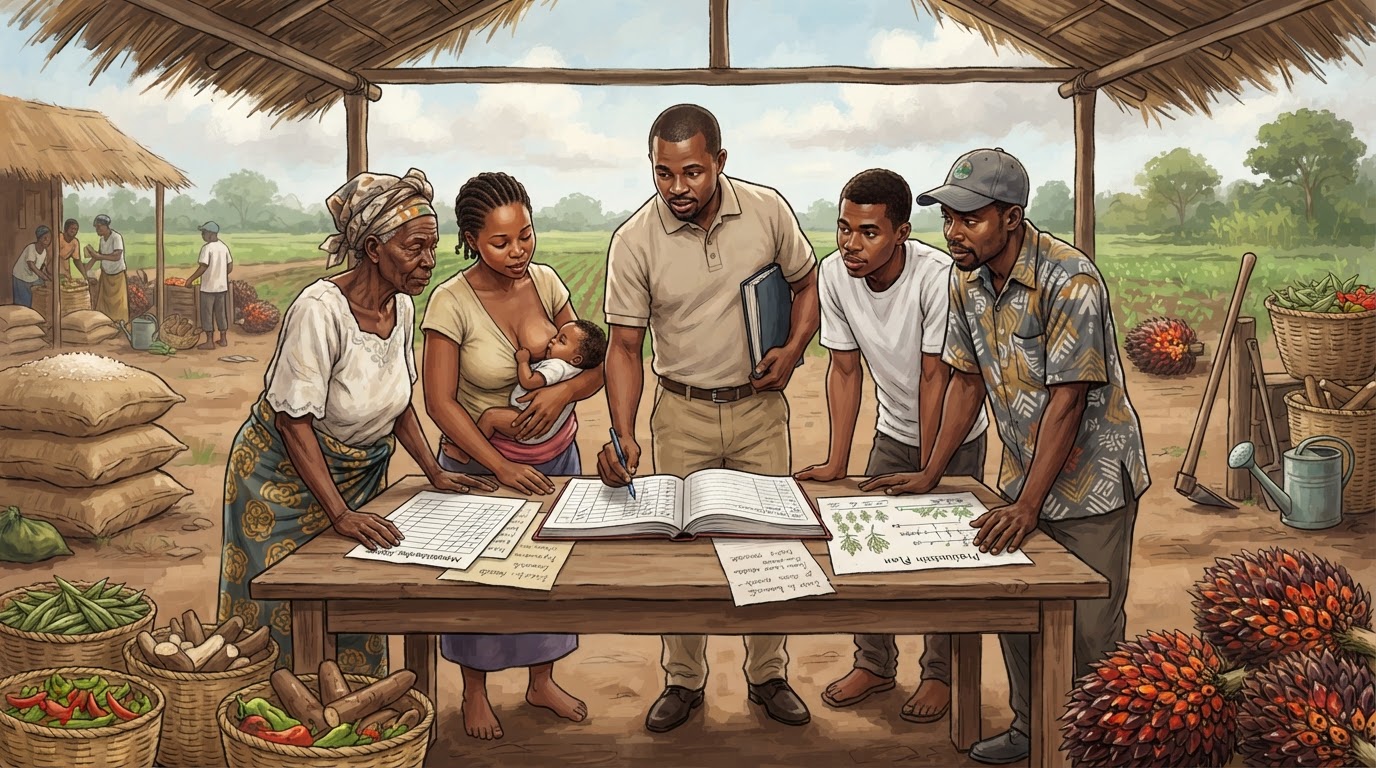
MONROVIA, Liberia, November 29, 2026 — The Cooperative Development Agency (CDA), working with the Smallholder Agriculture Transformation and Agribusiness Revitalization Project (STAR-P), has completed a capacity assessment of farmer-based organizations and cooperatives in 12 Liberian counties. The exercise is intended to help determine what support farmer groups may need to become better governed, more financially capable and more commercially prepared.
Reports published by The Independence Newspaper on November 27 and Global News Network Liberia on November 28 said the assessment examined the governance arrangements, financial management systems, production capacity and overall readiness of farmer-based organizations and cooperatives to benefit from STAR-P support.
What the assessment is expected to inform
CDA Director General Lwopu G. Kandakai said the findings should help strengthen farmers’ organizations and guide future interventions. The reports identify possible next steps including capacity-building training, assistance with cooperative registration and stronger links to markets.
Kandakai described the exercise as a way to identify viable and prepared groups that could make effective use of support. The published accounts do not provide the names of the 12 counties, the number of organizations assessed, the assessment scores or a county-by-county breakdown of findings.
How STAR-P fits into Liberia’s agriculture plans
The Ministry of Agriculture says STAR-P is designed to increase agricultural productivity and smallholder commercialization, with a focus on rice, oil palm and horticulture. The Ministry’s project information states that the programme was extended from an initial five-county scope to all 15 counties and identifies 38,000 smallholder farmers as its direct-beneficiary target, with at least 30 percent intended to be women.
The project is intended to strengthen farmer organizations and connect smallholders with agribusinesses, processors, buyers and other market actors. Better governance and financial records can help cooperatives manage shared resources, plan production, demonstrate readiness and negotiate more effectively with buyers and service providers.
Assessment is not the same as an award of support
The completion of the assessment does not mean that every organization reviewed has been approved for assistance, received a grant, obtained equipment or secured a buyer. The reports say the findings will guide future support; they do not announce a new disbursement, a list of selected cooperatives or a timetable for training and registration activities.
For farmers and the wider public, the next important information should include the counties and organizations covered, the main capacity gaps identified, the criteria that will be used to select groups for assistance, and when the planned training, registration support and market-linkage work will begin.
HeartTalk Network believes the assessment will matter most if it leads to transparent and practical support that reaches active farmer groups, including women-led and youth-led organizations, and helps them improve production, storage, processing and access to reliable markets. Publishing the findings in an accessible form would allow farmers and county stakeholders to understand what was learned and how decisions will be made.
Sources
- The Independence Newspaper, “CDA, STAR-P End Capacity Assessment,” November 27, 2026.
- Global News Network Liberia, “CDA, STAR-P Complete Farmers Capacity Assessment in 12 Counties,” November 28, 2026.
- Ministry of Agriculture, STAR-P project overview.
HeartTalk Network — Speaking from the Heart.



Leave a Reply