
MONROVIA, Thursday, November 5, 2026 — External debt across low- and middle-income countries climbed to a record US$9.4 trillion in 2025, increasing the pressure on governments already facing high borrowing costs and rising repayment bills, according to the World Bank’s latest annual debt report, reported by Reuters on Thursday.
The 5.5 percent increase was the largest annual rise since 2021. The new figures matter to Liberia because the country is seeking financing for infrastructure and essential public services while its latest debt-sustainability assessment warns that overall public-debt risks remain high, even though debt is judged sustainable under the baseline outlook.
Borrowing is rising — and becoming more expensive
Reuters, citing the World Bank’s International Debt Report, said borrowing by developing countries through private creditors and public bond issuance rose nearly 35 percent in 2025 to US$251 billion, the highest level in five years.
The World Bank reported that the poorest developing countries paid an average 8.2 percent on new commitments from private creditors and 9.4 percent on new bonds. Those are group averages, not Liberia-specific interest rates, and should not be presented as the rate Liberia pays on its own borrowing.
Low- and middle-income countries paid about US$1.4 trillion in principal and interest in 2025, the fifth consecutive annual increase. Payments to private creditors reached US$363 billion. The report also warned that debt-service costs can leave governments with less room to invest in education, healthcare, infrastructure and jobs.
Why the debt stock increased
The increase was not driven by new borrowing alone. The World Bank said the weaker US dollar accounted for more than 28 percent of the rise by increasing the dollar value of debt denominated in other currencies.
Some governments also issued new bonds to refinance maturing obligations, extending repayment schedules but often accepting higher interest rates without substantially reducing the total debt stock. The World Bank called for stronger debt transparency and better information about guarantees, new creditors and complex financing arrangements.
Liberia’s latest debt position
Liberia’s most recent published debt-sustainability assessment, prepared jointly by IMF and World Bank staff and included in the IMF’s May 2026 country report, put total public debt at about US$2.863 billion at the end of 2025, equal to 54.9 percent of gross domestic product.
The assessment recorded approximately US$1.868 billion in public external debt and US$995.8 million in domestic debt. It said the government paid US$196.1 million in debt service during 2025, equivalent to 3.8 percent of GDP and 18.7 percent more in nominal terms than in 2024.
The IMF and World Bank rated Liberia at moderate risk of external debt distress and high risk of overall public-debt distress. They nevertheless assessed public debt as sustainable under the baseline scenario, supported in part by the fact that more than 90 percent of external debt was on highly concessional terms and held by multilateral lenders. The assessment also warned that Liberia has limited room to absorb shocks.
That distinction is important. A high risk rating is a warning about vulnerability and the capacity to withstand adverse events; it is not a declaration that Liberia is in default or that a debt crisis is inevitable.
What the global figures mean for Liberia
The World Bank’s US$9.4 trillion figure covers the combined external debt stock of low- and middle-income countries. It is not Liberia’s debt total, and it should not be confused with the public-debt figure in Liberia’s IMF assessment.
For Liberia, the practical concern is the financing environment. If concessional funds become harder to secure or private borrowing becomes more expensive, the government could face tougher choices between new investment and the cost of servicing existing obligations. The IMF assessment notes that Liberia’s debt outlook depends on continued fiscal discipline, improved revenue collection and careful selection of debt-financed projects.
More than half of Liberia’s public debt was held by multilateral lenders at the end of 2025, according to the assessment. The World Bank and IMF accounted for 35.4 percent and 8.8 percent, respectively, of total public debt. Maintaining access to concessional finance therefore remains important, but transparency about all borrowing, guarantees and public-enterprise liabilities is equally necessary.
The accountability test: what borrowing delivers
For policymakers, the central question is not simply how much Liberia can borrow. It is whether each loan has affordable terms, a clear repayment plan and a project capable of producing measurable public benefits.
That requires timely publication of loan agreements and repayment schedules, transparent reporting of guarantees and state-owned-enterprise liabilities, stronger project appraisal, and public reporting on whether funded roads, schools, hospitals, water systems and other infrastructure are completed and delivering results.
These are policy implications drawn from the World Bank’s global warning and Liberia’s existing debt assessment; they are not new government measures announced on November 5. The next IMF and Ministry of Finance debt updates will be important for determining whether Liberia’s borrowing mix and debt-service burden are changing.
Sources and related HeartTalk reporting
- Reuters, November 5, 2026: Developing countries’ external debt hit record US$9.4 trillion in 2025, citing the World Bank.
- IMF Country Report No. 26/98, May 2026, including the joint IMF–World Bank debt-sustainability analysis for Liberia.
- World Bank International Debt Statistics — Liberia country data.
- HeartTalk Network: World Bank says Liberia’s 5.1% growth is not yet translating into jobs or poverty reduction.
- HeartTalk Network: Central Bank of Liberia’s August review of trade, reserves and bank lending.
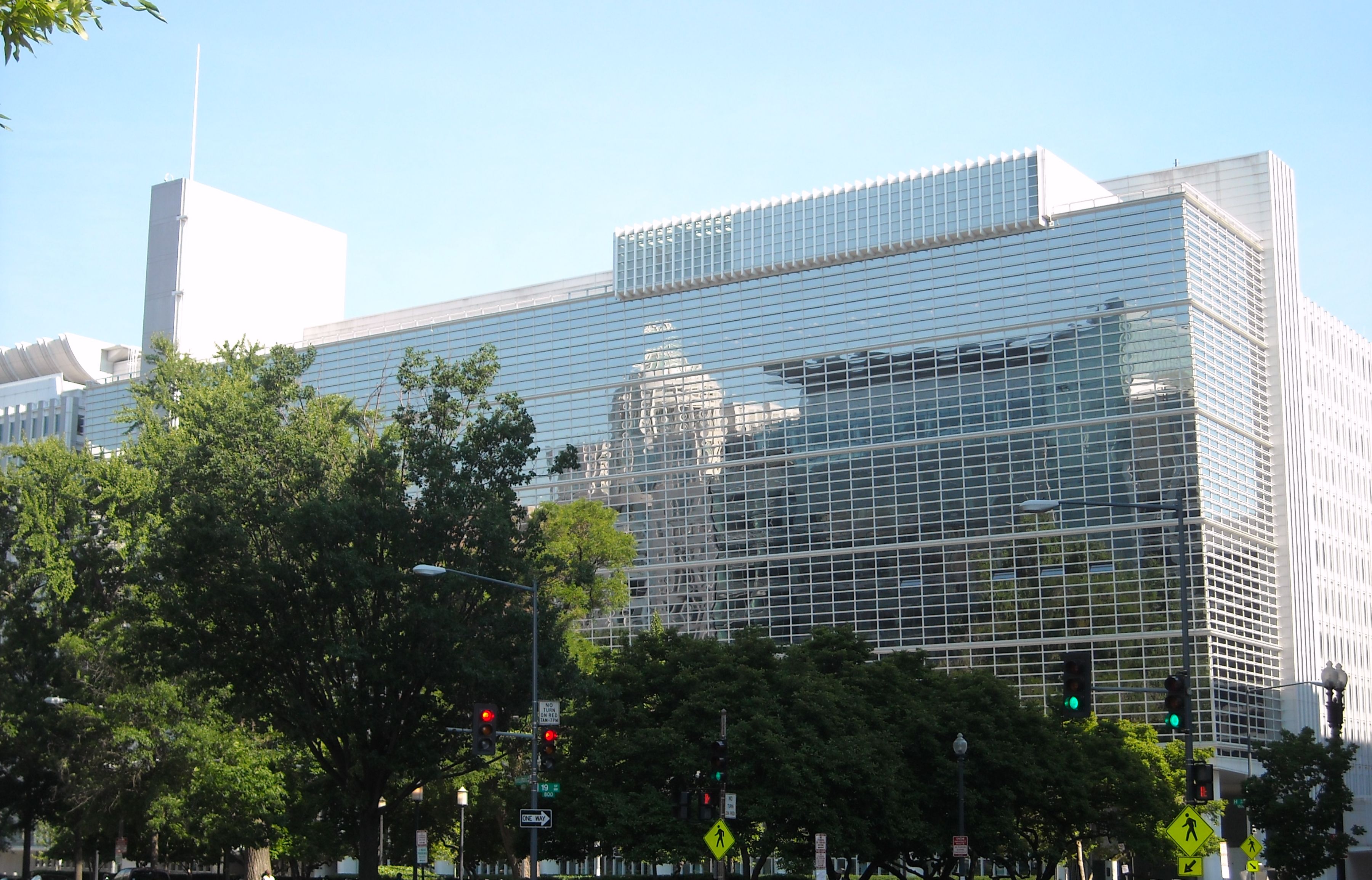
Image: World Bank Group headquarters in Washington, D.C. File photograph by AgnosticPreachersKid, licensed under Creative Commons Attribution-ShareAlike 3.0 via Wikimedia Commons. The photograph shows the institution, not Liberia’s debt or the report’s release.

HeartTalk Network — Speaking from the Heart.